Radiocarbon-dated remains from Málaga push the genet's arrival in Europe back centuries and rule out the Arabs as its introducers; the mystery of who brought it, and when, remains open.
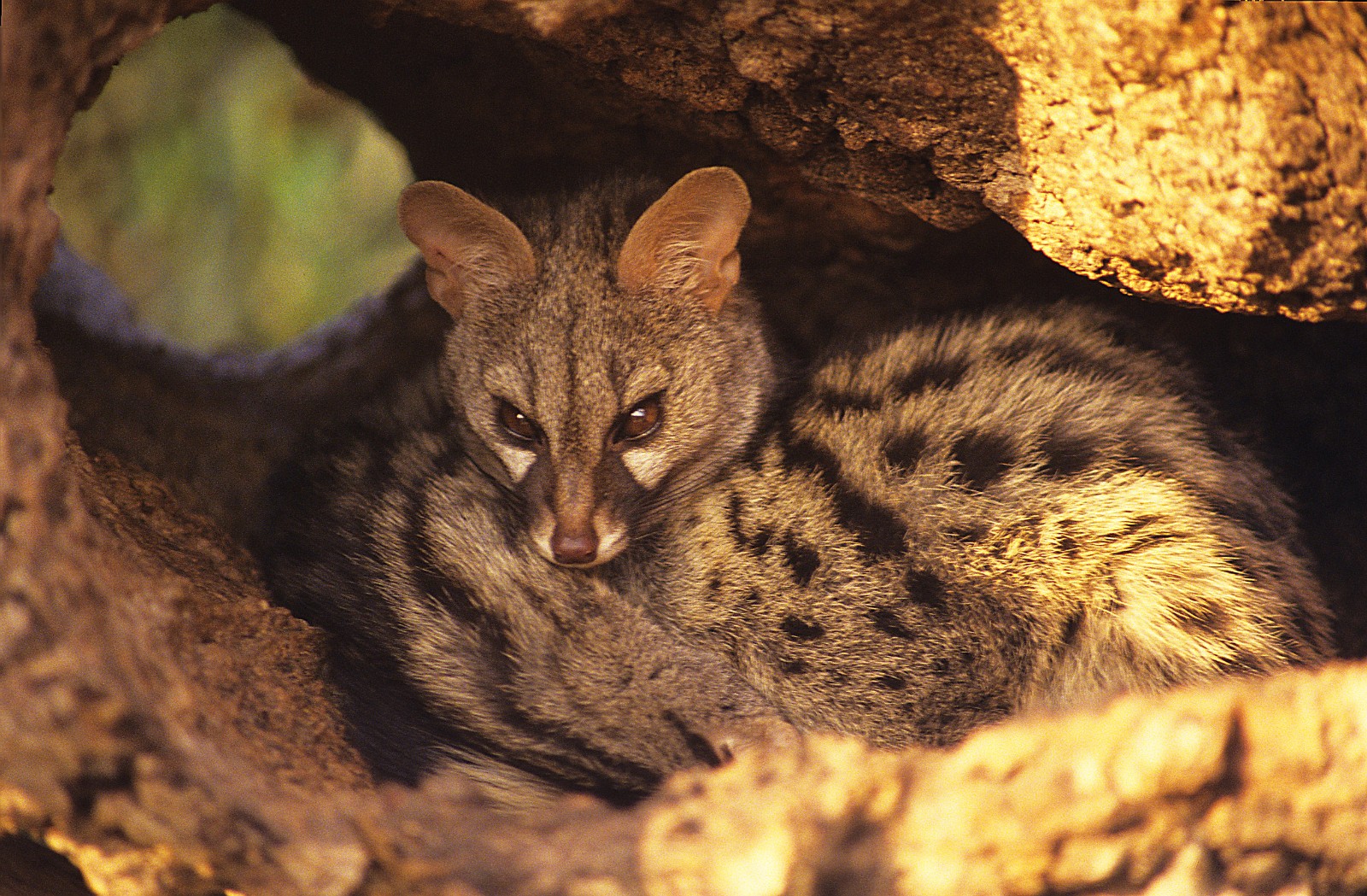
For decades it was taken as given that the genet (Genetta genetta) wasn't native to the Iberian Peninsula. The animal - an African relative of civets, with an elongated body, a ringed tail, and a temperament that made it valued as a rodent hunter - doesn't appear in the Iberian fossil record, so its presence can only be explained by a human introduction. The most repeated theory pointed to the Arabs, after 711, and the oldest known remains until recently - found at the Almohad castle of Mértola, in southern Portugal - dated to the early thirteenth century.
A study published in 2017 by Miguel Delibes and several colleagues changed that timeline. The team radiocarbon-dated two genet remains found in a rock shelter in Málaga, Cueva del Humo. One of them came back at 1,310 years old, which once calibrated places the animal, with more than 95% probability, between the years 656 and 773 - and with nearly 50% probability, before 708. In other words: probably before the Arab invasion of the Peninsula, and five hundred years older than the Mértola find.
That rules out the Almohads as the ones who introduced it and points to a different origin, perhaps Phoenician. The Málaga specimen's mitochondrial DNA added another twist: it belongs to a genetic lineage distinct from the one that dominates in Europe today, one found so far only in Andalusia, suggesting there were at least two independent arrivals.
The study's own authors add a useful warning: the bones were found in layers much older than their actual age, having been carried there through rabbit burrows - a reminder that dating an animal purely by the stratum it turns up in can mislead.
Tus registros ayudan a saber dónde vive cada especie. Sin anuncios molestos y con los datos abiertos a la ciencia.
Abrir Mammaling