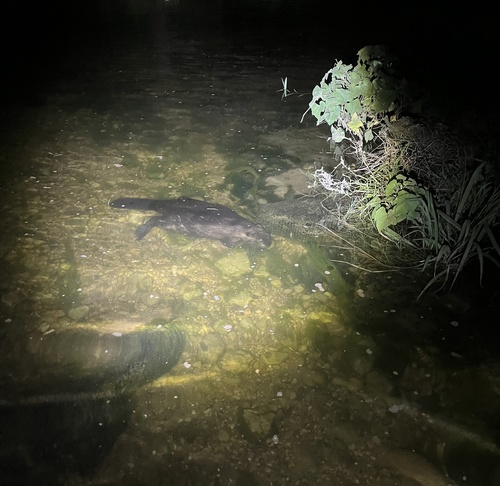
He is the ecosystem engineer for excellence among American mammals, able to completely transform the course of a river by constructing branches and mud diques that create new ponds, wetlands and habitats from which they benefit after dozens of other species of fauna and flora. He has the orange incisives, reinforced with a layer of iron in the enamel that makes them exceptionally resistant, and a flat and sparkling tail that uses as a timon when swimming and as an alarm signal, hitting it against water with a hearing blast at a distance when he detects danger. He lives in families organized around a central construction, the madrid-residence, a shelter of branches and barroades with swaddling that protect him from most terrestrial predators. His ability to change the landscape has been so determining in the
Large-sized rodent, the largest in North America, robust body, dense and waterproof dark brown coat, very characteristic wide tail, flat and scaly, and palmized back legs. It differs from the almizcler rat and other semi-water rodents by its much larger size and by that distinctive flat tail, very different from the rounded tail of the almizcler rat.
Footprint with 5 fingers, the rear palm and notably larger than the front, 12-15 cm, often wiped out by the drag of the tail when moving. Excrements rarely seen on the ground when defecating almost always in the water, where they are quickly dissolved into plant fiber. The most unmistakable signal is their engineering activity: branches and clay diques that embalsome water, the strawberry-living of cluster-shaped branches in the middle of the water, and rotted stems in the shape of a sand clock with very broad and parallel incisive marks.
Rivers, streams, lakes and wetlands with nearby wooden vegetation, from lowlands to middle mountain areas. Distributed by much of North America, from northern Mexico to Canada and Alaska.
Herbivorous, it feeds on shell, leaf and tender branches of river tree, as well as aquatic plants, cutting entire trees to access the shell of the upper branches.
It lives in families organized around a central nursery-house, with adults forming long-lasting stable couples and previous-year breeds helping to raise the new layers.
Its populations recovered notably throughout the 20th century following the historic collapse caused by mass hunting for the fur industry, and today are generally considered stable and expanding in much of their distribution area.
Conflict with human activity by flooding agricultural land or infrastructure when building dicks, and capture as population control in some areas; does not face significant threats at species level.
See all species accounts for rodents · Full species index
Mammaling is a free app for logging the mammals you find. You record a sighting in a moment — even if it's just a track — your life list grows, and the record becomes available to scientific and conservation projects.
It runs on your phone with nothing to install. If you like, it adds to your home screen like any other app.
Open Mammaling