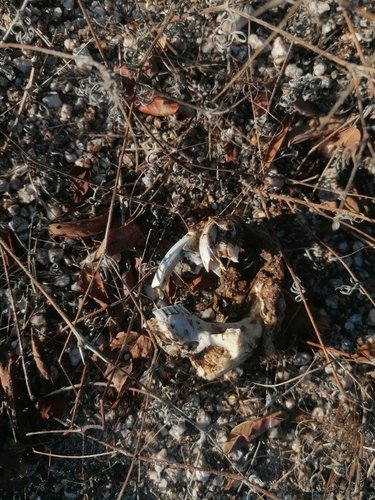
The Giant Pocket Gopher is a rodent that lives under the coffee plantations and pastures of Mesoamerica. It is rarely seen because it spends almost its entire life underground, excavating a network of tunnels that can extend for tens of metres and moving large volumes of soil. It can be identified by the mounds of fresh earth it leaves on the surface when cleaning a tunnel – a sign much easier to find than the animal itself. Its range extends from central Mexico to Honduras. It is the largest of the American pocket gophers, with incisors so long that they protrude even when its mouth is closed.
The Giant Pocket Gopher has a robust, cylindrical body, adapted to subterranean life, with dark brown fur. Its short, very muscular forelegs are armed with long claws for digging, and it possesses large cheek pouches (abazones) used for carrying food. Its large, always visible incisors protrude beyond the lips even when the mouth is closed, an adaptation for gnawing without swallowing soil. It differs from other fossorial rodents in its range by its much larger size and by its characteristic external cheek pouches of the family Geomyidae.
The most obvious tracks and signs are the fan-shaped mounds of loose soil, about 20-40 cm in diameter, which the Giant Pocket Gopher leaves on the surface each time it pushes soil out of a new tunnel. Unlike the burrows of other mammals, these mounds have no visible entrance, because the animal seals the tunnel entrance from within after each digging session. The tunnels, 7-9 cm in diameter, can extend for several tens of metres underground, with nesting and storage chambers at greater depth. Rows of crops with plants cut at the root and pulled downwards, without the animal being seen, are another characteristic track and sign of its activity. This is very different from the damage caused by rabbits or hares, which cut the plant above ground.
Wet forest, coffee plantations, pastures and farmland with deep, soft soil, from central Mexico to Honduras, mainly in lowlands and mid-elevation areas.
Roots, tubers, bulbs, and subterranean plant parts, plus vegetation it drags underground from the entrance of its burrows; it can cause significant damage to root crops and young coffee plantations.
Solitary and territorial, each individual occupies and defends its own burrow system, which it constantly expands. Primarily subterranean in activity, it rarely comes to the surface except briefly to push out soil or search for vegetation close to a burrow.
It is considered common and has a stable population throughout much of its Central American range. In some agricultural areas, it is actively persecuted due to the damage it causes to crops.
Direct persecution as an agricultural pest in areas where coffee and edible roots are grown.
See all species accounts for rodents · Full species index
Mammaling is a free app for logging the mammals you find. You record a sighting in a moment — even if it's just a track — your life list grows, and the record becomes available to scientific and conservation projects.
It runs on your phone with nothing to install. If you like, it adds to your home screen like any other app.
Open Mammaling