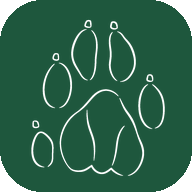
Illustration generated with artificial intelligence from reference sources and reviewed by the team. Use it as a guide, not as a definitive identification key: it may contain errors in anatomical details such as the number of toes, claw marks or the scale. If something looks off, write to us at [email protected]: corrections from people who know the field are what keep improving these plates.
The Egyptian Mongoose is the only naturally occurring representative of its family in Europe. A survivor that arrived on the continent centuries ago, it continues to slowly expand its home range northwards.
It has a very particular technique for opening eggs and hard-shelled prey: it throws them backwards between its hind legs against a stone or hard surface, a behaviour it shares with very few carnivores.
It moves with stealth, both on the ground and through dense vegetation. Its presence often goes completely unnoticed, despite it not being particularly rare in the areas where it lives.
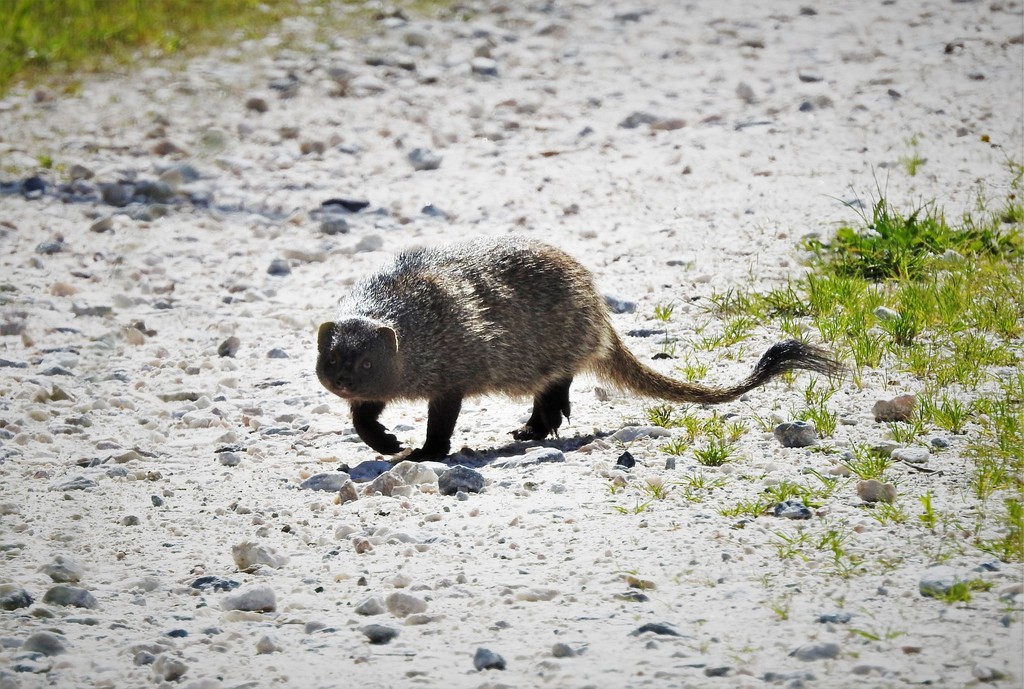
An elongated mustelid, the Egyptian Mongoose has short legs, a long neck, and a very long, bushy tail that tapers towards the tip. Its greyish, mottled fur is due to hairs with alternating light and dark bands, giving it a characteristic grizzled appearance. It can be confused with the Pine Marten or Common Genet where their ranges overlap. However, it differs in its more elongated body, its proportionally longer tail which is thicker at the base, and by moving much more often on the ground than in trees.
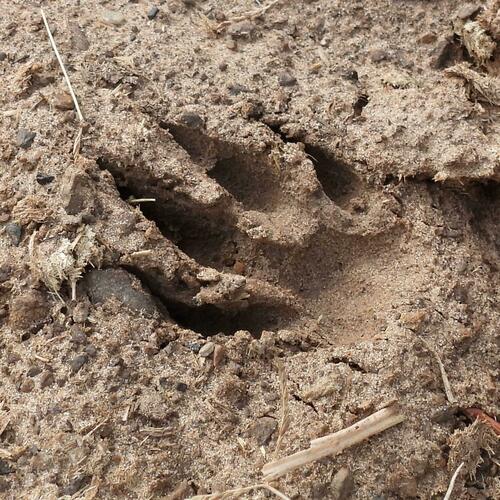
Elongated track, 3.5-4.5 cm long, with five toes and distinct, non-retractile claws, narrower than that of a similarly sized domestic cat. Elongated, twisted droppings, 6-9 cm long, containing hair, feathers, and insect exoskeletons, are often deposited in small, visible communal latrines near paths and field edges. Broken eggshells, snapped in the middle, are commonly found near their latrines. This results from their characteristic technique of throwing eggs against the ground to open them.
Mediterranean scrubland, riparian woodland, wetland and agricultural areas with good vegetation cover, from lowlands to mid-mountain areas.
Distributed across much of Africa, the Arabian Peninsula and a strip of southwestern Europe, where it constitutes the only European population of the Herpestidae family.
Opportunistic carnivore: small mammals, birds, reptiles, eggs, insects and occasionally fruit, obtained by active hunting both on the ground and in areas of dense vegetation.
The Egyptian Mongoose can be solitary or live in small family groups, depending on the area. Its activity is mainly diurnal in quiet areas, becoming more crepuscular where human pressure is greater. It marks its territory with anal gland secretions and maintains communal latrines used by several individuals as a social communication point.
Populations are stable and expanding in some areas, with slow colonisation of new areas north of its European range in recent decades.
Roadkill in areas of dense traffic, occasional persecution due to conflict with poultry farming, and habitat loss of riparian and scrubland due to agricultural transformation.
See all species accounts for carnivores · Full species index
Mammaling is a free app for logging the mammals you find. You record a sighting in a moment — even if it's just a track — your life list grows, and the record becomes available to scientific and conservation projects.
It runs on your phone with nothing to install. If you like, it adds to your home screen like any other app.
Open Mammaling