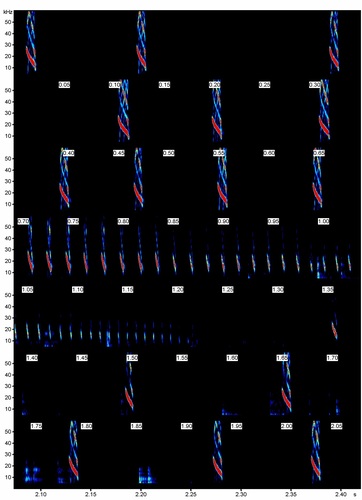
One of the few bats in the world capable of fishing directly from the sea, the Fish-eating Myotis flies low over the water surface, using its huge hind feet armed with long, curved claws to snag small fish and crustaceans just beneath the surface. It lives on desert islands in the Gulf of California, forming colonies in rock crevices alongside seabird colonies, sharing space and sometimes even the smell of accumulated guano. Its ability to tolerate seawater—far saltier than most mammals can drink—is one of the most remarkable physiological adaptations of any known bat. Endemic to a very specific archipelago, its distribution is among the most unique of any bat species in North America: tied entirely to desert islands surrounded by open ocean.
A medium-large bat for its family, with greyish-brown to reddish pelage, disproportionately large hind feet with long, curved claws adapted for fishing, and long, narrow wings. It is distinguished from any other bat in the region by these remarkably developed hind feet and by its strict association with islands in the Gulf of California; the unique nature of its adaptations means it is unlikely to be confused with other species.
Desert islands and coastal rocks in the Gulf of California, roosting in rock crevices. Endemic to an archipelago of islands in the Gulf of California, between the states of Baja California, Baja California Sur and Sonora, in north-western Mexico.
Piscivorous and carnivorous, feeding on small fish and crustaceans caught directly off the sea surface using its clawed hind feet.
Forms colonies in rock crevices on its native islands, often alongside seabird colonies. It is nocturnal, and its physiology allows it to ingest seawater without renal damage—a rare adaptation among mammals.
Populations are considered in decline due to habitat disturbance on its native islands caused by introduced predators and increasing human disturbance on certain islands in the Gulf of California.
Introduction of cats and rats to its roosting islands, which prey directly on the colonies, and increasing human disturbance from tourism and fishing activities on some islands in the Gulf of California.
See all species accounts for bats · Full species index
Mammaling is a free app for logging the mammals you find. You record a sighting in a moment — even if it's just a track — your life list grows, and the record becomes available to scientific and conservation projects.
It runs on your phone with nothing to install. If you like, it adds to your home screen like any other app.
Open Mammaling