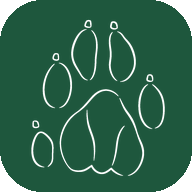
Illustration generated with artificial intelligence from reference sources and reviewed by the team. Use it as a guide, not as a definitive identification key: it may contain errors in anatomical details such as the number of toes, claw marks or the scale. If something looks off, write to us at [email protected]: corrections from people who know the field are what keep improving these plates.
The largest terrestrial carnivore in much of the Northern Hemisphere, the Brown Bear can bring down an adult Moose with a single swipe. An instant later, it might spend half an hour eating blueberries with the same dedication a smaller bear would use to search for insects under a stone. This contrast effectively summarises its extraordinarily flexible diet.
It has a reproductive peculiarity little known outside mammology. Mating occurs in spring or summer, but the embryo halts its development for months, not implanting in the uterus until the female enters her winter den. As a result, the young are born tiny and blind in the midst of winter torpor, months after mating.
Its presence in the cultural imagination of Europe, Asia, and North America is so ancient that it appears in the mythologies of peoples separated by thousands of kilometres who never had contact with each other.
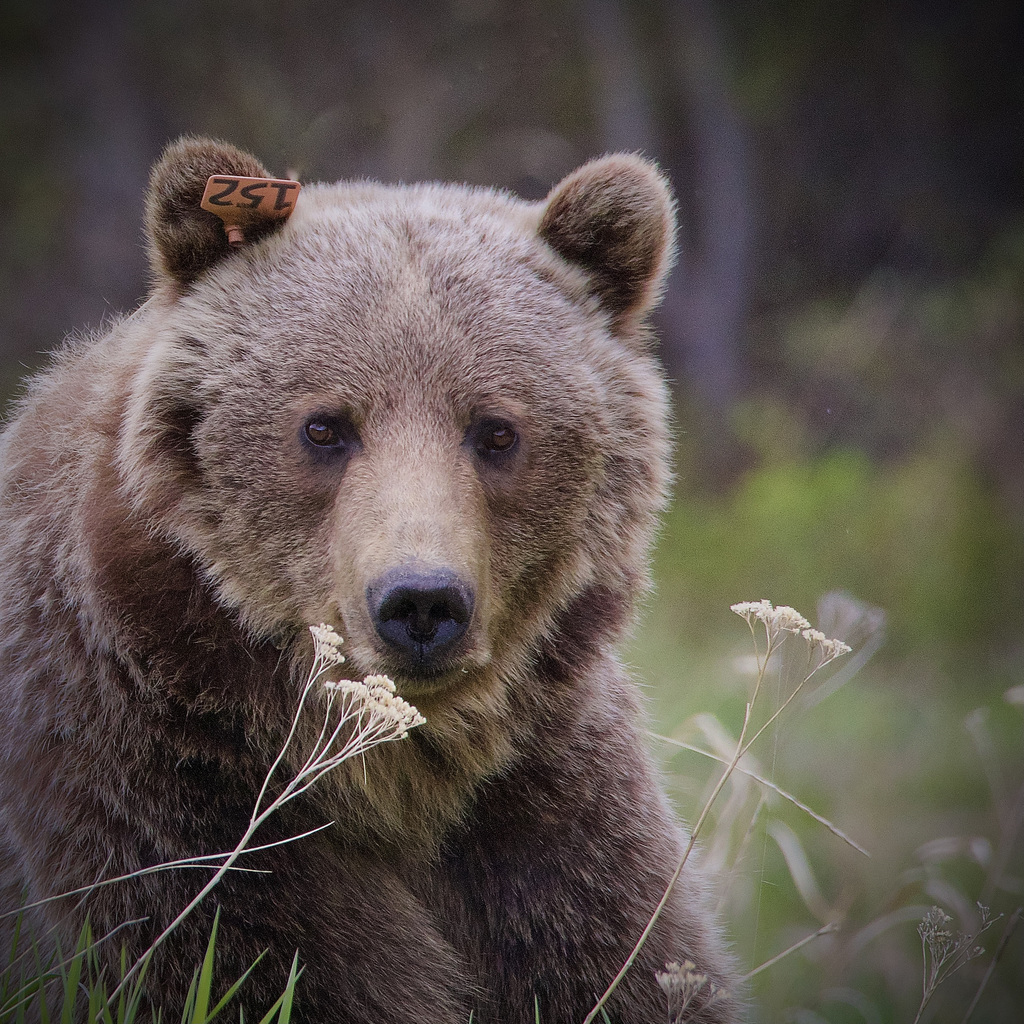
The largest terrestrial carnivore in most of its range, the Brown Bear has a very bulky body with a characteristic muscular hump over the shoulders. Its fur varies from light blonde to almost blackish-brown depending on the population and even within the same litter. It has an elongated muzzle and long, slightly curved fore claws, adapted more for digging than climbing. It differs from other large carnivores in its range by this very marked shoulder hump, which is absent in the American Black Bear, and by a more concave facial profile than the latter.
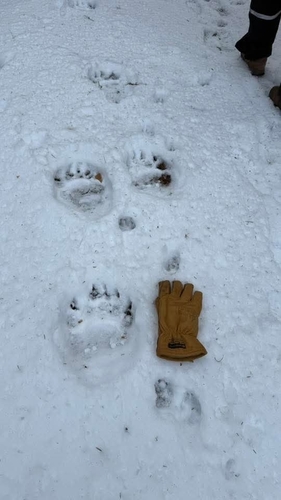
Very large hind track, 15-23 cm long, with 5 toes and claw marks clearly protruding from the plantar pad. This differs from the track of a large feline, which never shows a claw mark. The fore track is more rounded, with even more elongated claw marks.
Voluminous and irregular droppings, highly variable in shape and content depending on the seasonal diet, with clearly visible remains of berries, seeds or prey hair. The Brown Bear leaves claw marks and rubbing marks high up on tree trunks, which are used as communication points between individuals. Its presence is also revealed by overturned stones and logs where it has searched for insects, large carrion partially buried under soil and leaf litter, and excavated or natural dens used for winter hibernation.
Boreal and mountain forest, alpine tundra, and high-altitude scrubland and grassland, from sea level to high mountain areas depending on the region.
Very fragmented distribution across North America, Europe, and Asia, with one of the widest distribution ranges of any terrestrial carnivore despite having disappeared from much of its historical range in Western Europe.
Extremely opportunistic, the Brown Bear is an omnivore, feeding on roots, berries, insects, fish, carrion and large prey depending on seasonal and regional availability. Coastal populations specialise in catching salmon during the spawning season.
Solitary and territorial outside the oestrus period, with a home range that can be enormous in populations with low prey density. It enters a period of winter torpor in a den for several months in regions with cold winters. Embryo implantation is delayed until the start of this torpor, so the young are born inside the den in mid-winter.
The species maintains numerous and stable populations globally, mainly due to large populations in Russia and North America. However, many Western European populations have been reduced to small, isolated groups. These depend on reintroduction programmes and strict protection to prevent local extinction.
Loss and fragmentation of forest habitat; direct conflict with livestock farming and beekeeping, leading to retaliatory hunting or poaching; roadkill where roads cross its territory; and in the smallest European populations, a reduced genetic base hindering long-term viability.
See all species accounts for carnivores · Full species index
Mammaling is a free app for logging the mammals you find. You record a sighting in a moment — even if it's just a track — your life list grows, and the record becomes available to scientific and conservation projects.
It runs on your phone with nothing to install. If you like, it adds to your home screen like any other app.
Open Mammaling