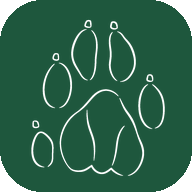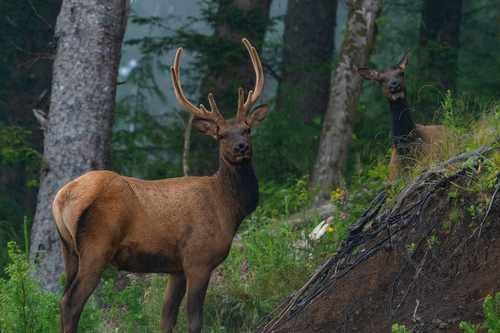
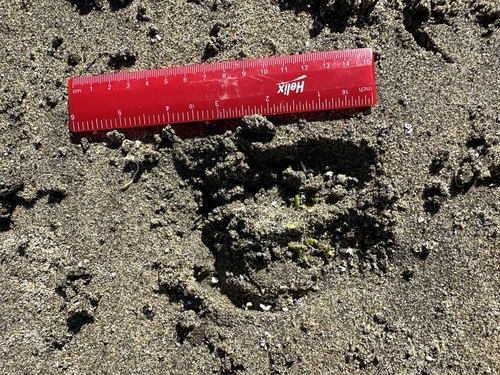
Illustration generated with artificial intelligence from reference sources and reviewed by the team. Use it as a guide, not as a definitive identification key: it may contain errors in anatomical details such as the number of toes, claw marks or the scale. If something looks off, write to us at [email protected]: corrections from people who know the field are what keep improving these plates.
The roar of a male in rut, a deep, prolonged sound audible over a kilometre away, is one of the most recognisable sounds of autumn in much of Europe and Asia. The Western Red Deer is one of the most widespread deer species in the Northern Hemisphere, naturally present from North Africa to Siberia, and has also been introduced to South America and Oceania. Each year, the male completely loses its antlers and regrows them from scratch, each time with more points. This is one of the fastest tissue regeneration processes known among mammals.
Large deer, with a reddish-brown coat in summer that becomes greyer and denser in winter, and a pale patch (scut) on the rump. Only the male carries branched antlers, which he sheds and renews each year, gaining more points as he matures. It can be confused with the Fallow Deer, which is smaller and has palmate antlers. It can also be confused with the Sika Deer, which is smaller and has white spots that persist into adulthood in some populations.
Cleft track, inverted heart-shaped, 6-10 cm long in adult males. The tip is somewhat more rounded than that of the Roe Deer, which is more pointed.
Cylindrical droppings, 2-3 cm long, with a small dimple at one end and a point at the other. They are grouped in piles, with consistency highly variable depending on the season and pasture.
In autumn, males scrape mud wallows and rut with a deep, prolonged bellow audible from a great distance. This is the Western Red Deer's most unmistakable sign.
Open woodland, scrub and mountain grassland, from lowlands to alpine zones.
A Holarctic species, naturally distributed across much of Europe, Central Asia and North Africa (Atlas), and introduced to New Zealand, Australia and Argentina. In North America, the western lineage (Wapiti) is now considered a separate species by some authors.
A grazer and browser, its diet of grass, shoots, bark, and fruit varies seasonally. Mountain populations move between summer and winter pastures.
Western Red Deer are gregarious, with female herds separate from males for most of the year. During the autumn rut, dominant males form harems, defending them with roars and antler fights.
Some mountain populations undertake seasonal altitudinal migrations between summer and winter pastures.
Western Red Deer maintains numerous and largely stable or increasing populations thanks to game management across much of Europe and Asia. However, some peripheral and isolated subspecies, such as the Kashmir Deer (hangul), are in a much more precarious conservation status.
Loss of forest habitat and fragmentation by infrastructure, hybridisation with the introduced Sika Deer in some areas of Europe, and poaching pressure in peripheral populations in Asia.
See all species accounts for even-toed ungulates · Full species index
Mammaling is a free app for logging the mammals you find. You record a sighting in a moment — even if it's just a track — your life list grows, and the record becomes available to scientific and conservation projects.
It runs on your phone with nothing to install. If you like, it adds to your home screen like any other app.
Open Mammaling